When planning a commercial parking lot striping project, most property owners focus on getting the markings completed. But there’s another important decision that can affect the overall cost and long-term performance of the project.
Should you use traditional traffic paint or thermoplastic pavement markings?
Both materials serve important purposes, but they aren’t necessarily interchangeable. Choosing the right product depends on traffic volume, pavement condition, location, budget, and how the markings will be used.
At Affordable Striping, we work with commercial property owners, paving contractors, developers, and property managers throughout Florida’s Treasure Coast who need practical pavement-marking solutions.
Here’s what you should know before deciding which material makes sense for your property.
What Is Traffic Paint?
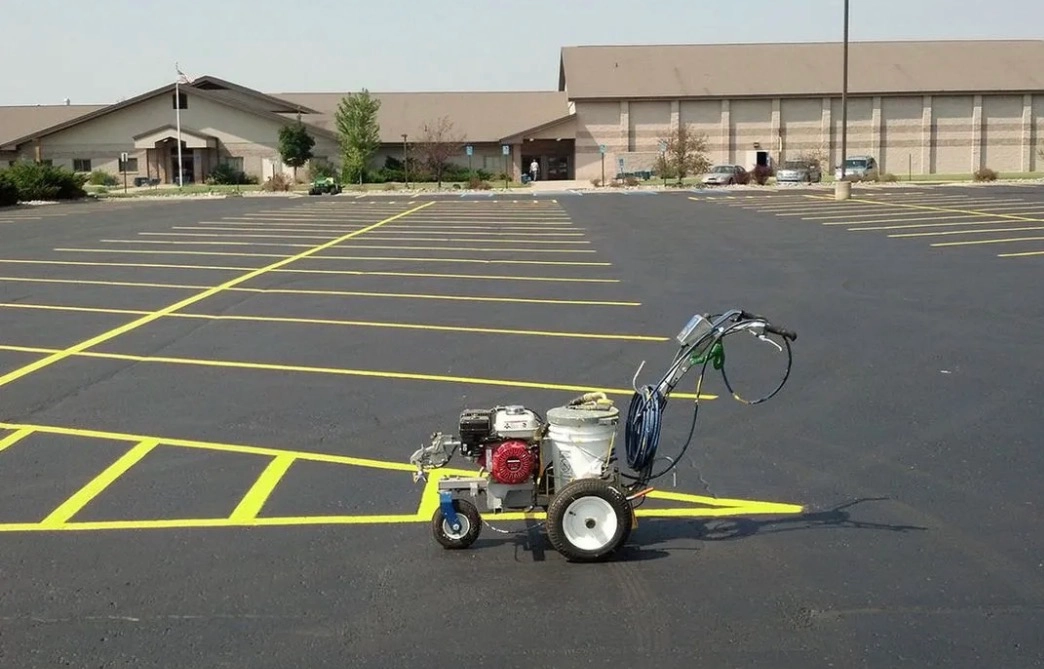
Traffic paint is one of the most commonly used materials for commercial parking lot striping.
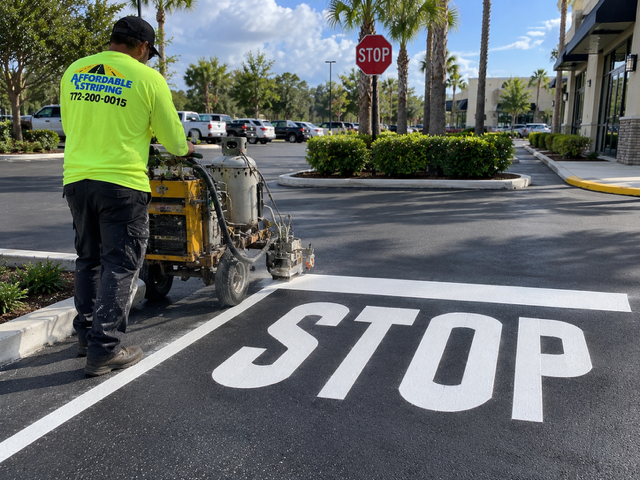
It’s frequently used for parking stalls, directional arrows, stop bars, crosswalks, loading areas, and other pavement markings.
Traffic paint offers several advantages:
- Generally lower initial material and installation costs
- Efficient application across large parking areas
- Suitable for many standard commercial parking lot projects
- Available in colors commonly used for traffic and parking markings
- Practical for properties with routine pavement maintenance schedules
For many shopping centers, apartment communities, office buildings, and smaller commercial properties, quality traffic paint is a cost-effective choice.
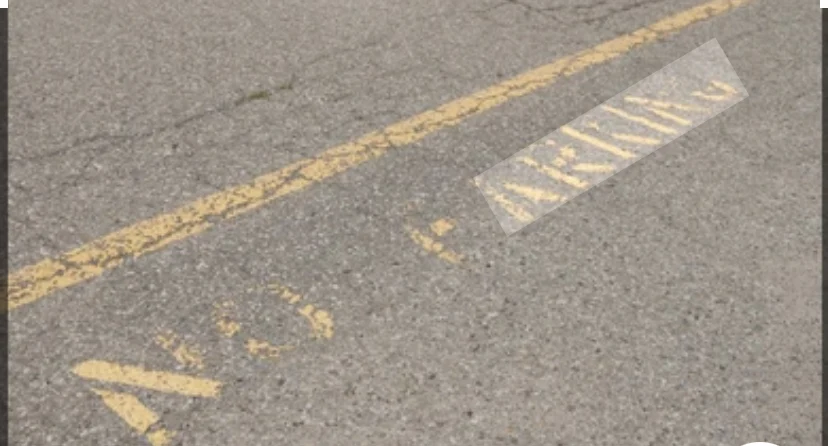
However, painted markings gradually wear as vehicles travel over them. The rate of wear depends on traffic, pavement condition, material selection, application quality, and environmental exposure.
What Is Thermoplastic Pavement Marking?
Thermoplastic is a pavement-marking material that is applied using heat.
Depending on the application, it may be installed as hot-applied thermoplastic or as a preformed thermoplastic marking that is heated and bonded to a suitable pavement surface.
Once properly installed and cooled, thermoplastic forms a comparatively thick, durable marking.
Thermoplastic is commonly considered for applications such as:
- Crosswalks
- Stop bars
- Directional arrows
- Roadway markings
- High-traffic entrances and exits
- Specialty pavement legends
- Commercial and municipal pavement-marking projects
Thermoplastic generally has a higher initial installation cost than conventional traffic paint, but its potential for longer service life can make it attractive in locations experiencing substantial vehicle traffic.
Where Does Thermoplastic Make the Most Sense?
Consider the entrance to a busy shopping center in Port St. Lucie.
Vehicles continuously enter and exit the property, turn across pavement markings, and stop at designated intersections.
These movements create different wear conditions than a parking stall located in a quieter section of the property.
For locations experiencing frequent tire contact, turning movements, and heavy traffic, thermoplastic may offer advantages over conventional paint.
The key is identifying which markings experience the greatest wear rather than automatically upgrading the entire parking lot.
Does Every Parking Space Need Thermoplastic?
Usually, no.
For many commercial properties, installing thermoplastic throughout every parking stall would create additional expense without necessarily delivering enough benefit to justify the investment.
A more practical approach may be to use conventional traffic paint for standard parking stalls while considering thermoplastic for selected high-traffic markings.
For example, a commercial property could use:
Traffic paint: Standard parking stalls, reserved spaces, parking-area markings, and other locations with relatively moderate wear.
Thermoplastic: Frequently traveled stop bars, selected crosswalks, directional arrows, and other markings where additional durability is desirable.
This combination can help property owners direct their pavement-marking budget toward the areas where upgraded materials may provide the greatest value.
Florida Weather Is Another Consideration
Commercial parking lots throughout Martin County, St. Lucie County, and surrounding South Florida communities experience intense sunlight, heavy seasonal rainfall, high humidity, and substantial pavement temperatures.
These conditions make proper material selection and application especially important.
However, neither traffic paint nor thermoplastic should be selected based on weather alone.
The existing pavement surface, manufacturer’s application requirements, traffic conditions, and project specifications all need to be considered.
Proper preparation and installation are essential regardless of which material is selected.
What About Fresh Asphalt or Concrete?
Not every pavement-marking material is appropriate for every surface.
New asphalt may require a waiting period or other preparation before certain marking systems can be installed.
Concrete surfaces may also require specialized preparation, primers, or products designed for that application.
This is particularly important on new construction projects where the paving contractor, general contractor, and striping subcontractor must coordinate their work.
Before specifying thermoplastic or traffic paint, confirm that the selected product is appropriate for the pavement surface and project conditions.
Is Thermoplastic More Expensive Than Traffic Paint?
Generally, yes.
Thermoplastic typically costs more upfront because of the material itself, specialized application equipment, preparation requirements, and installation process.
But the initial price doesn’t tell the entire story.
For certain high-traffic applications, a longer-lasting marking may reduce the frequency of future replacement.
For other areas, standard traffic paint may remain the more economical option.
The most useful comparison considers both the initial installation cost and the expected maintenance requirements over time.
Contractors: Check Your Pavement-Marking Specifications Before Bidding
For general contractors, site-development companies, and paving contractors, the choice between traffic paint and thermoplastic isn’t always optional.
Construction plans may specifically identify the required pavement-marking materials.
A project might call for conventional traffic paint in private parking areas while requiring thermoplastic for certain roadway or traffic-control markings.
These requirements can significantly affect subcontractor pricing.
Affordable Striping works with contractors to review pavement-marking plans and identify the specified materials before providing estimates.
Getting those details established during bidding can help avoid unexpected material substitutions, pricing differences, and scheduling issues later.
Choosing the Right Pavement Markings for Your Florida Property
There isn’t one pavement-marking material that’s best for every commercial property.
The right solution depends on how the property operates, where vehicles travel, what surface is being marked, and how much the owner wants to invest in long-term maintenance.
Sometimes conventional traffic paint is exactly what’s needed.
Other times, thermoplastic is worth considering.
And in many cases, using both materials strategically may provide the best balance between cost and durability.
Commercial Traffic Paint and Thermoplastic Services on Florida’s Treasure Coast
Affordable Striping provides professional commercial parking lot striping and pavement-marking services throughout Martin County, St. Lucie County, Indian River County, Okeechobee County, Palm Beach County, and surrounding South Florida communities.
We work with property managers, HOAs, commercial property owners, general contractors, paving companies, sealcoating contractors, and developers.
Our services include conventional traffic paint, thermoplastic pavement markings, new parking lot layouts, crosswalks, directional arrows, stop bars, specialty pavement markings, signage, curb stops, and related commercial parking-area improvements.
Not Sure Which Material Your Project Needs? Ask Affordable Striping.
Whether you’re maintaining an existing commercial parking lot or bidding a new construction project, Affordable Striping can help you evaluate the pavement-marking requirements.
Send us your property address, project details, or construction plans. We’ll help identify the appropriate pavement-marking scope and provide an estimate based on your project’s needs.
There’s no reason to pay for an upgraded material where it isn’t necessary—or overlook a more durable option where it could make a meaningful difference.
Contact Affordable Striping today at 772-200-0015 to request your commercial pavement-marking estimate.
Affordable Striping — professional traffic paint, thermoplastic, and commercial pavement-marking services throughout Florida’s Treasure Coast.